3D Flowers Tumbler Wrap Graphics Review
As a graphic designer who has spent the last decade refining brand identities and preparing files for print-on-demand clients, I approach every new digital asset with a healthy dose of skepticism. We have all been there: downloading a "high-resolution" file only to find pixelated edges or poor transparency handling when placed on a dark background. However, my recent experience integrating the 3D Flowers Faux Embroidery Tumbler Wrap into a client’s seasonal product line changed my perspective on how quickly we can elevate a simple merchandise item into a premium brand touchpoint.
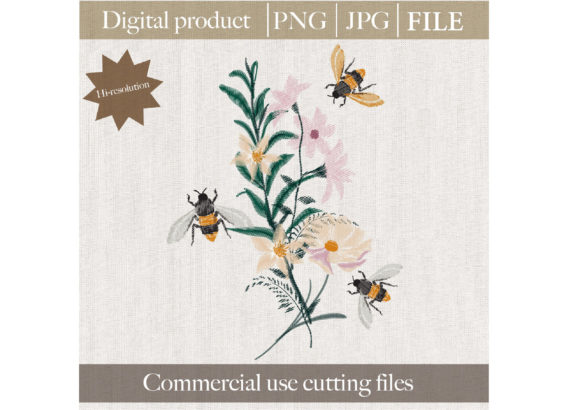
The project at hand was for a boutique handmade business specializing in artisanal beverages and lifestyle accessories. The client needed a visual update for their spring campaign, specifically targeting their Etsy shop and local farmers' market presence. They wanted something that felt tactile, warm, and inviting without the high cost of actual textile embroidery. This is where the concept of faux embroidery shines. It mimics the texture and depth of stitched thread using digital shading and highlights, offering the aesthetic appeal of handmade craft with the scalability and consistency of a digital product.
First Impressions and Visual Mood
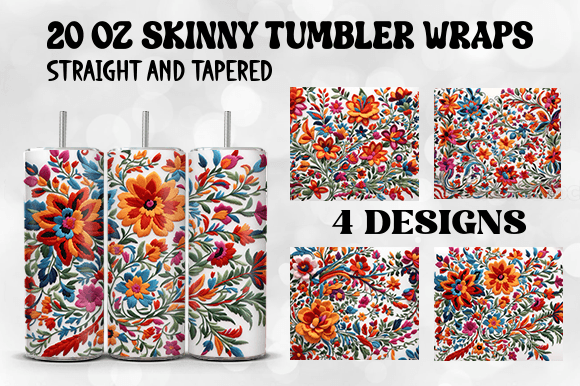
Upon opening the file, the first thing that struck me was the depth. Many flat floral illustrations fail to capture the interplay of light and shadow that makes embroidery look realistic. This asset, however, uses subtle gradients and simulated stitch directions to create a convincing three-dimensional effect. The mood is distinctly romantic yet modern, fitting perfectly into the current trend of cottagecore and soft minimalist design. For a designer, this means the asset does not need heavy modification to feel "expensive." It carries its own visual weight.
The color palette is versatile, but what matters most in a professional context is how it interacts with other elements. In our test layouts, the floral motifs served as excellent anchors for typography. Whether paired with a delicate script font for a wedding invitation vibe or a bold sans serif for a modern cafe menu, the flowers provided a decorative frame that guided the eye without overwhelming the message. This balance is crucial in marketing visuals, where readability often suffers under heavy decoration.
Practical Application in Client Projects
While the primary format is designed for Tumbler Wraps, limiting this asset to drinkware would be a missed opportunity. In my workflow, I treat such high-quality PNG designs as modular components of a larger brand identity system. Here is how I deployed them across various deliverables:
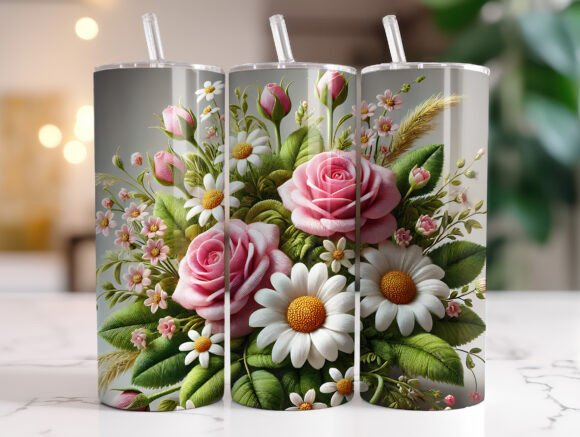
- Product Mockups and Packaging Design: The tapered PNG variant is essential for sublimation printing on conical tumblers. It eliminates the distortion that often occurs when wrapping a straight image around a curved surface. For packaging, I extracted individual flower elements to create custom tissue paper patterns and sticker designs, ensuring brand consistency from the product to the unboxing experience.
- Social Media Graphics and Pinterest Pins: The high resolution (300 DPI) allows for crisp scaling on digital platforms. I used the floral clusters as corner accents for Instagram posts announcing new arrivals. The faux texture adds a layer of sophistication that flat vector art sometimes lacks, increasing engagement rates due to its visual interest.
- Printable Design Assets: For clients selling digital downloads, this asset can be incorporated into printable wall art or greeting cards. The key is maintaining the integrity of the "stitched" look by avoiding excessive compression during export.
- Cricut and Sublimation Projects: For makers using cutting machines, the clear PNG transparency is vital. While this is not an SVG design, the clean edges allow for precise placement on tote bags, t-shirt designs, and mousepads. It bridges the gap between digital sellers and physical crafters.
Navigating Layout and Hierarchy Challenges
Every design asset has its limitations, and honest review requires addressing where this specific graphic might struggle. The intricate details of the faux embroidery effect are its strongest feature, but also its vulnerability. In small sizes, such as favicon icons or tiny footer logos, the texture can become muddy. I advise against using the full wrap design in cramped spaces. Instead, isolate single blooms or smaller clusters for these applications.
Furthermore, visual hierarchy must be managed carefully. Because the flowers have significant visual weight due to their simulated depth, they can compete with primary text if placed too close. In my layout tests, I found that adding a slight drop shadow to the text or placing the text inside a semi-transparent shape helped separate the content from the background graphics. This ensures that the emotional appeal of the flowers enhances rather than obscures the call to action.
Another consideration is background contrast. Faux embroidery relies on highlights to simulate thread sheen. On very light or white backgrounds, these highlights may disappear, flattening the image. Conversely, on extremely dark backgrounds, the shadows might blend in too much. I recommend testing the asset on mid-tone backgrounds or using a subtle outline to maintain definition. This is a common challenge with clipart and illustration assets, and pre-testing saves hours of revision time later.
Technical Specifications and Designer Notes
From a technical standpoint, receiving both a straight PNG and a tapered PNG is a significant value-add. Most generic design bundles only provide rectangular images, forcing the designer to manually warp and distort the artwork in software like Photoshop or Illustrator. Having the tapered version ready for sublimation design streamlines the workflow considerably, reducing production time for print-on-demand sellers.
Before finalizing any client project, I always run through a checklist:
- Check Transparency: Ensure the PNG background is truly transparent and not a white box. This asset passed this test with clean edges.
- Test Print Quality: Always print a proof at 100% scale. Digital screens can hide minor artifacts that become visible on physical materials like ceramic or metal.
- Verify Licensing: Confirm the commercial license terms. For small business branding and Etsy products, knowing you have the right to sell items featuring this graphic is non-negotiable.
- Color Profile Conversion: If sending to a professional printer, check if the file is in RGB or CMYK. Most digital downloads are RGB, so a conversion may be necessary to prevent color shifting in print.
Final Verdict for Creative Professionals
In the fast-paced world of digital design, finding assets that feel unique yet versatile is rare. The 3D Flowers Faux Embroidery Tumbler Wrap succeeds because it offers a specific aesthetic—tactile, handmade, and premium—that resonates with today’s consumers. It is not just a picture of a flower; it is a texture that adds perceived value to the final product.
For brand owners, marketers, and fellow designers, this asset is a strong candidate for spring and summer campaigns, wedding-related merchandise, and boutique lifestyle brands. It integrates seamlessly into Canva templates for those who prefer drag-and-drop simplicity, while offering enough fidelity for advanced users in Adobe Creative Cloud. By understanding its strengths in creating visual trust and its limitations in small-scale applications, you can leverage this graphic design asset to create polished, professional, and emotionally engaging designs. It is a worthwhile addition to any creative marketplace library, provided it is used with intention and technical precision.